Behind India’s Skylines Lies a City Built on Debt

In the glittering skylines of India’s metro cities lies a hidden reality — one where millions of workers who keep cities running are trapped in cycles of debt, high rent, and insecurity. A powerful article published by The Wire has sparked fresh discussion on how India’s urban system silently extracts from the poor while offering them little protection in return.

The article, written by urban expert and former Shimla Deputy Mayor Tikender Singh Panwar, argues that Indian cities are not merely failing the poor by accident — they are structurally designed in a way that benefits capital and wealth accumulation while pushing informal workers deeper into economic vulnerability.

Using the story of a domestic worker named Sonali in Delhi’s Vasant Kunj, the article paints a deeply human picture of urban survival. Her husband’s traditional utensil-selling business collapsed due to falling sales, forcing the family to rely on financial help just to stay afloat. While Sonali was fortunate enough to receive support without repayment pressure, the article says millions of urban workers are caught in exploitative loan systems charging extremely high interest rates.
According to the report, informal workers often pay interest rates as high as 36% to 60% annually through moneylenders, local credit groups, and informal finance chains — far higher than the interest rates middle-class families receive from formal banks for education or housing loans. The article describes this as a “differential cost of existence,” where the poor pay more simply to survive in the city.
But debt is only one side of the crisis.
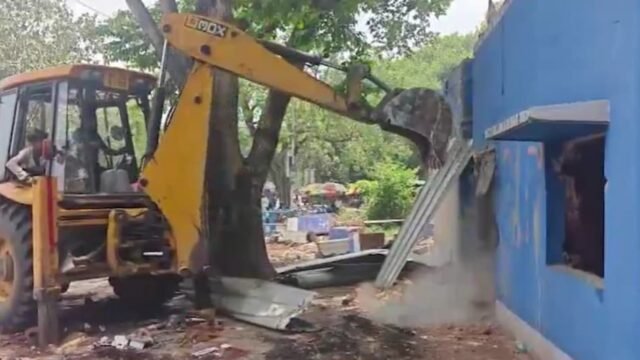
The report also highlights how informal vendors and labourers are squeezed through expensive and insecure rental systems. In places like Delhi’s Vasant Kunj, informal markets reportedly operate under local rent-seeking networks where vendors pay heavy rents without any legal protection or tenure security. In one shocking example mentioned in the article, debris was allegedly dumped onto a vending site after vendors resisted increased rent demands.
The article strongly argues that this is not a policy mistake, but an “architecture of extraction” where labour, credit, and urban space are all designed in ways that keep workers financially trapped. It warns that rising inequality, combined with climate pressures and lack of social protection, could eventually push cities toward deeper unrest and instability.
What makes the piece especially powerful is its larger question: Who truly owns the city — the wealthy who profit from it, or the workers who build and sustain it every day?
At a time when conversations around inequality, unemployment, inflation, and housing are growing sharper across India, the article has resonated widely for exposing the invisible economic pressures faced by urban workers. It also reignites an important debate about whether India’s development model is creating inclusive cities — or simply modern centres of inequality hidden beneath infrastructure and growth statistics.