‘If Parents Are IAS Officers, Why Reservation Again?’ Supreme Court’s Sharp Remarks Spark National Debate
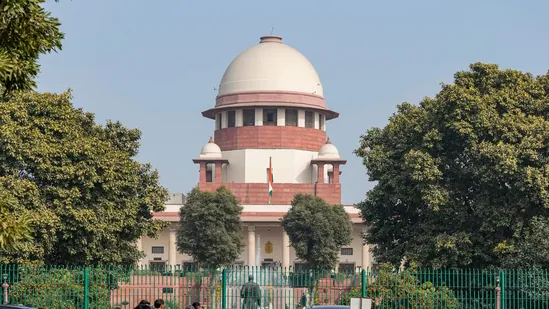
A powerful observation by the Supreme Court has once again ignited a nationwide debate over India’s reservation system and the concept of the “creamy layer” within backward classes. During a hearing related to OBC reservation benefits, the apex court questioned whether children from highly educated, financially secure, and socially well-established families should continue receiving reservation advantages generation after generation.

The remarks came from a bench of Justices BV Nagarathna and Ujjal Bhuyan while hearing a case linked to a Karnataka candidate seeking reservation benefits despite belonging to a financially strong family background. The court openly raised concerns about whether the original purpose of reservation — social upliftment — is being diluted when already privileged sections continue to avail quota benefits.

“If both parents are IAS officers, why should their children still get reservation?” Justice Nagarathna remarked during the hearing, stressing that social mobility and economic progress should eventually help families move out of the reservation framework.
The case involved a candidate from Karnataka’s Kuruba community who was denied a caste validity certificate after authorities found that his family income was nearly ₹19.5 lakh annually. Investigators also noted that both his parents were government employees earning substantial salaries, placing the family within the “creamy layer” category.
The Supreme Court observed that reservation was introduced to uplift socially and educationally backward communities, but once a family achieves significant economic and professional advancement, continuing the same benefits indefinitely raises important questions of fairness and balance.
The hearing quickly triggered wider political and social discussions across the country. Supporters of stricter creamy layer rules argue that reservation benefits are increasingly being dominated by already well-settled families, leaving genuinely poor and backward individuals at a disadvantage. On the other hand, critics warn that economic success alone does not completely erase caste-based discrimination and social barriers.
The court also discussed concerns about whether rising salaries due to inflation should automatically push government employees’ families out of reservation eligibility. Lawyers representing the petitioner argued that salary alone should not become the deciding factor, warning that even lower-ranking employees could eventually lose reservation benefits because of changing pay structures.
The issue has become even more sensitive after recent debates around extending the creamy layer concept to Scheduled Castes and Scheduled Tribes as well. While the government has clarified that no such policy exists currently for SC/ST categories, judicial discussions around the future of affirmative action are clearly intensifying.
As the case continues, the Supreme Court’s observations have once again brought one of India’s most emotionally and politically charged issues back into the national spotlight — raising difficult questions about equality, social justice, and the future direction of reservation policies in modern India.