Power is Influence”: Microsoft AI CEO Mustafa Suleyman’s Quote Sheds New Light on the Age of Artificial Intelligence
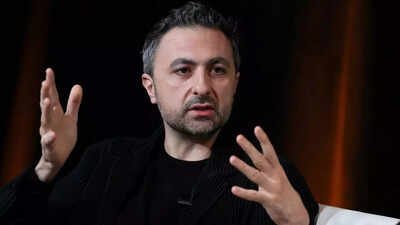
Artificial Intelligence is no longer a futuristic concept—it is already deeply embedded in everyday life. From the way people consume news to how businesses operate and governments function, AI quietly shapes decisions at almost every level. Amid this rapid transformation, a striking definition of power by Mustafa Suleyman has gone viral, offering a sharper way to understand what AI is becoming.

Suleyman, who also co-authored The Coming Wave: AI, Power, and Our Future, defines power as the ability to act, influence others, and shape the course of events. On the surface, it sounds like a simple philosophical idea. But when applied to AI, it becomes a powerful lens to understand today’s technological reality.

AI and the meaning of “power”
According to Suleyman’s definition, power is not just about authority—it is about capability and influence. And in that sense, modern AI systems already reflect significant power.
AI tools today can generate content, analyse massive datasets, predict outcomes, and even assist in critical decision-making. Whether it is recommending what people watch online, detecting fraud in financial systems, or helping doctors identify diseases earlier, AI is actively influencing real-world outcomes.
This means AI is not just a passive tool—it is becoming an active force that shapes behaviour, decisions, and systems across industries.
From theory to real-world impact
One of the most important ideas in Suleyman’s perspective is that AI should not only be judged by future possibilities like Artificial General Intelligence (AGI), but by what it can already do today.
In healthcare, AI is improving diagnosis speed and accuracy. In finance, it is monitoring transactions and managing risks. In media, it influences what content goes viral and what people see on their screens. In governance, it is being used for large-scale data processing and administrative efficiency.
Each of these roles reflects a growing shift: AI is no longer experimental—it is infrastructural.
Why this definition matters now
The debate around AI often swings between excitement and fear of a distant future. But Suleyman’s framing brings attention back to the present. It suggests that AI’s true significance lies not in hypothetical superintelligence, but in its current ability to influence systems, economies, and human behaviour.
In other words, AI already holds a form of power—not through intention, but through impact.
A changing global conversation
As AI continues to evolve, experts argue that society must rethink how it understands technology. The focus is shifting from “what AI might become” to “what AI is already doing.”
Suleyman’s quote captures this transition clearly: power is not theoretical—it is measurable in real-world outcomes.
And by that measure, AI is already one of the most powerful forces shaping the modern world.
Bottom line
The message is simple but profound: AI is not waiting for the future to matter. It already does.
As governments, companies, and individuals continue to integrate AI into daily life, understanding this new form of “power” may be key to navigating the next technological era responsibly.