“Salary 20,000”: The Workers’ Revolt That Shook Noida’s Factory Belt
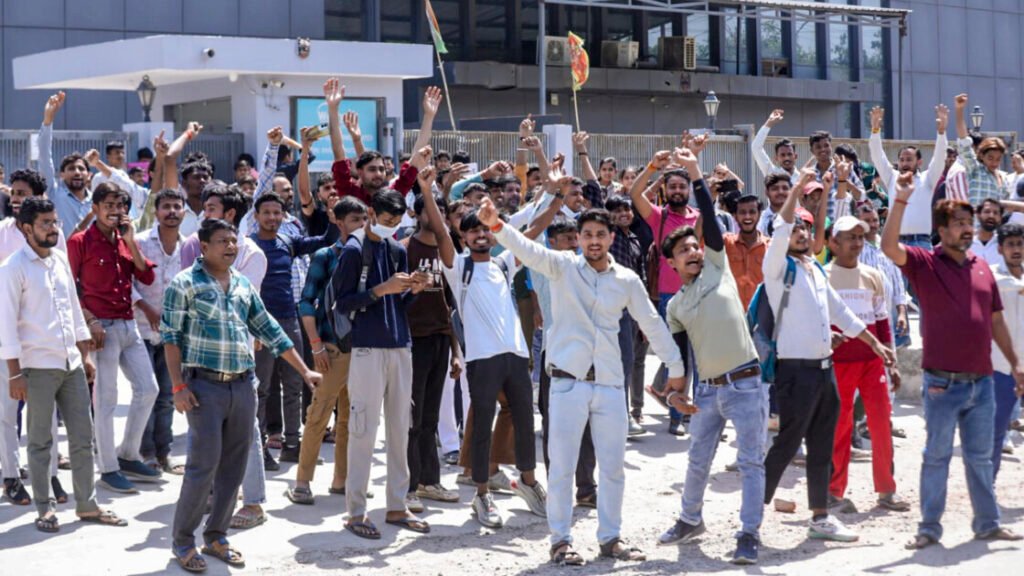
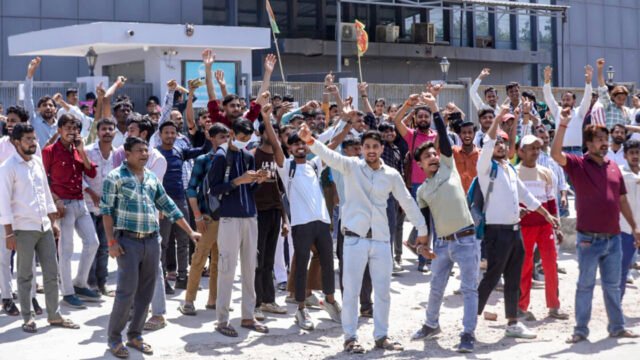
Noida: Factory workers during a protest demanding a hike in wages, in Noida, Gautam Buddh Nagar district, Uttar Pradesh, Monday, April 13, 2026. The protest carried incidents of arson, vandalism and stone-pelting reported from Phase-2 and Sector 60 areas, police said. (PTI Photo)(PTI04_13_2026_000079B)
What began as a simple demand written on cardboard placards has now turned into one of the biggest labour uprisings seen in India’s industrial sector in recent years. Across Noida’s massive factory zones, thousands of workers walked out of their workplaces demanding one thing — a monthly salary of ₹20,000 that they say is necessary just to survive.

The protests, which spread rapidly across nearly 80 industrial sites in April 2026, exposed the harsh realities hidden behind India’s booming manufacturing economy. Workers from automobile, garment, and electronics factories gathered outside factory gates instead of entering them, holding placards that read only two words: “Salary 20,000.”

According to reports and worker testimonies, many employees claimed they were surviving on salaries between ₹11,000 and ₹13,000 per month despite working exhausting shifts lasting 12 to 16 hours a day. Rising rent, food prices, school fees, transport costs, and cooking gas expenses had pushed many families to the edge.
The movement reportedly began in industrial hubs like Manesar before spreading rapidly to Noida’s factory clusters. Workers from companies linked to automobile manufacturing, garments, and export industries joined the protests, demanding fair wages, proper overtime pay, weekly offs, and humane working conditions.
What made the protests different was their leaderless nature. There were no major union banners or political flags dominating the demonstrations. Instead, workers themselves used social media, WhatsApp groups, and independent digital platforms to mobilize support and share videos from the ground.
While most demonstrations reportedly remained peaceful, clashes erupted at a few locations after tensions escalated, leading to traffic disruptions, police deployment, and tear gas action in parts of Noida. Mainstream media largely focused on visuals of violence, but many independent reports highlighted the deeper frustrations driving workers onto the streets.
Workers described being treated “like machines,” denied proper rest, forced into overtime, and struggling to provide even basic necessities for their families. Several women workers also spoke about difficult and humiliating workplace conditions.
The protests have now sparked a nationwide debate about wages, inflation, labour rights, and the condition of India’s migrant workforce. Economists and labour experts argue that the unrest reflects a much larger structural problem — where rising living costs are growing far faster than worker salaries.
For many workers, however, the issue is far more personal than political. As one repeated slogan from the protests captured it: they are not demanding luxury — they are simply demanding the ability to live with dignity.