“Where Are the Leaders?” — Dr. Ajoy Kumar’s X Post Sparks Debate Over Global Leadership and Diplomacy
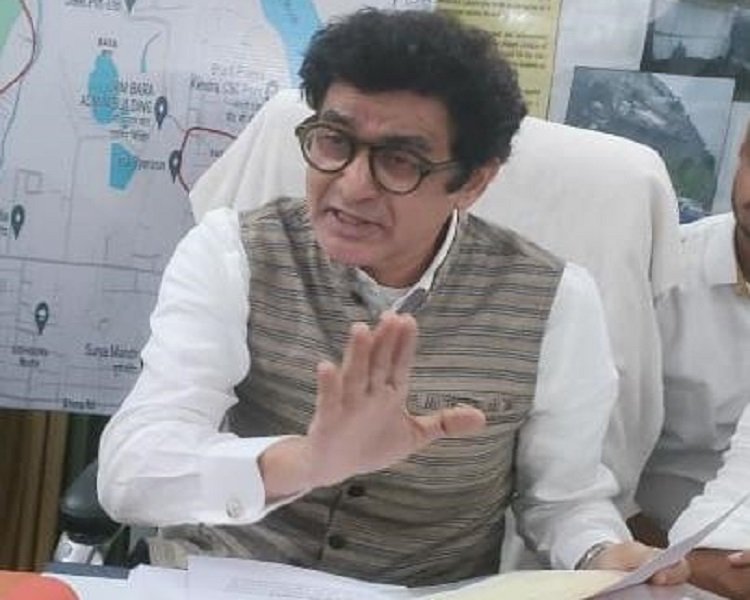
A recent X (formerly Twitter) post by Dr. Ajoy Kumar has triggered conversations online about leadership, diplomacy, war, and the changing nature of global politics. Reacting to reports that former US President Donald Trump is “seriously considering” fresh strikes against Iran if negotiations fail, Dr. Kumar questioned whether the world still has leaders capable of preventing conflict through dialogue and diplomacy.

In his post, Dr. Kumar invoked the names of India’s former Prime Ministers Jawaharlal Nehru, Indira Gandhi, and Rajiv Gandhi, presenting them as examples of leaders who, in his view, stood firmly for peace, non-alignment, and national sovereignty during periods of global instability.

He wrote:
“Where are leaders who once brought nations together in times of crisis like Pandit Nehru?”
“Where are leaders like Pandit Nehru, who had the ability to call up emergency meetings at the UN encouraging warring sides to sit down and pursue peace?”
“Where are leaders like Smt Indira Gandhi who stood firmly against US dominance?”
“Where are leaders like Shri Rajiv Gandhi who stood bravely in the face of militancy?”
The post came in response to a PTI report citing Axios, which claimed that Donald Trump is considering new military strikes against Iran if last-minute peace negotiations fail. The development has once again intensified fears of escalating tensions in West Asia and the possibility of a broader regional conflict.
Dr. Kumar’s remarks reflect a wider concern shared by many observers across the world — that modern geopolitics is increasingly driven by military positioning, strategic alliances, and power competition rather than dialogue-based diplomacy. By referencing India’s past leaders, he appeared to highlight an era when India often positioned itself as a voice for peace, mediation, and non-alignment on the global stage.
Jawaharlal Nehru, India’s first Prime Minister, played a major role in shaping the Non-Aligned Movement during the Cold War, attempting to maintain India’s independence from both American and Soviet power blocs. Indira Gandhi was known for taking strong and independent foreign policy decisions, especially during the 1971 Bangladesh Liberation War. Rajiv Gandhi, meanwhile, took a strong stand against militancy and also advocated for nuclear disarmament and international cooperation.
The post has generated mixed reactions online. Supporters praised the message as a reminder of diplomacy-first leadership and India’s historic global role in peace efforts. Critics, however, argued that every era faces different geopolitical realities and that comparing modern conflicts directly with Cold War-era politics may oversimplify today’s challenges.
The discussion also reflects a larger global anxiety surrounding the Iran situation. Any direct escalation involving Iran and the United States could impact oil markets, global trade routes, regional security, and international diplomacy.
At a time when wars and geopolitical tensions dominate headlines worldwide, Dr. Ajoy Kumar’s post has reignited a deeper question: in an increasingly polarized world, is diplomacy losing space to confrontation?