Jamshedpur’s Lifeline Rivers in Danger: Swarnarekha and Kharkai Facing Ecological Crisis
The twin rivers of Jamshedpur — Swarnarekha River and Kharkai River — are now facing what environmental experts are calling a serious ecological emergency. Once known as the city’s lifeline, these rivers are rapidly losing their natural balance due to rising pollution, shrinking water levels, and unchecked waste discharge.

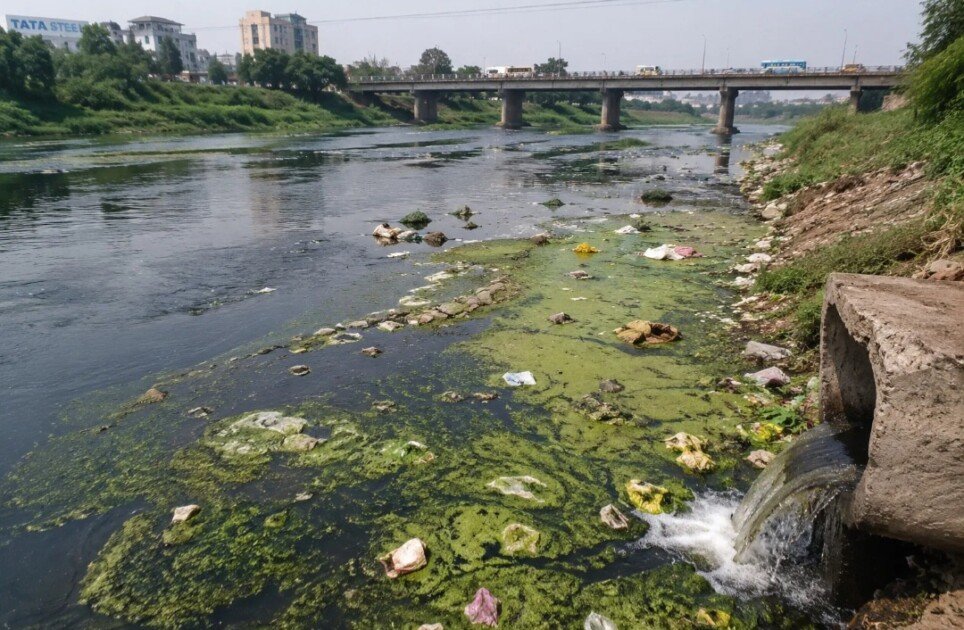
On the occasion of International Biodiversity Day, environmentalists raised alarm over the deteriorating condition of the rivers and warned that if urgent steps are not taken, the aquatic ecosystem could suffer irreversible damage within the next few years. Experts say untreated sewage and industrial waste from urban areas like Jamshedpur and Adityapur are continuously flowing into the rivers, making the water increasingly toxic.

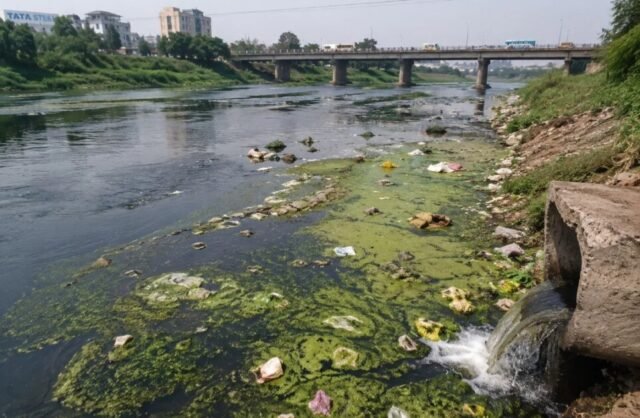
The situation becomes even worse during summer when water levels drop sharply. Lower water flow increases pollution concentration and reduces dissolved oxygen levels, making survival difficult for fish and other aquatic species. In recent weeks, incidents of mass fish deaths in the Swarnarekha River have already sparked concern among locals and pollution control officials.
Environmental experts have also noticed the rapid spread of green algal layers across parts of the Kharkai River. These algae block sunlight from entering the water, affecting photosynthesis and gradually turning parts of the river stagnant and foul-smelling. Scientists say the growing presence of pollution-tolerant organisms is a clear sign that the rivers are under severe stress.
The crisis is not limited to aquatic life alone. Several migratory and local bird species that depend on the river ecosystem are also under threat. Birds such as the Eurasian Hoopoe, Bluethroat, and Ruddy Shelduck have traditionally visited the riverbanks during winter, but experts fear their numbers may decline if pollution continues unchecked.
Environmental activists believe that government efforts alone will not be enough to save these rivers. They are urging industries to properly treat waste before discharge and appealing to citizens to stop dumping garbage, plastic, and puja waste into the water.
For the people of Jamshedpur, the Swarnarekha and Kharkai are more than just rivers — they are part of the city’s identity. But unless immediate action is taken, these lifelines could slowly turn into dying water bodies, leaving behind an environmental crisis that future generations may struggle to reverse.