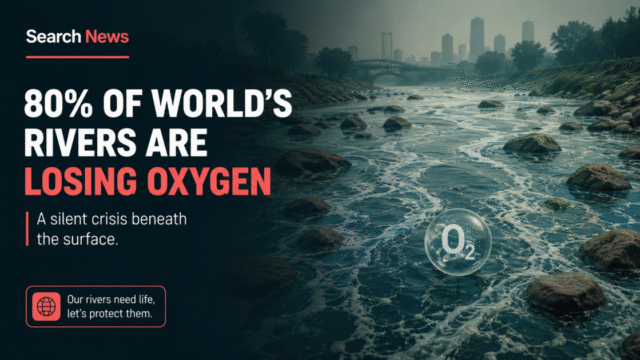
Rivers Running Out of Breath: New Study Warns of a Silent Global Crisis
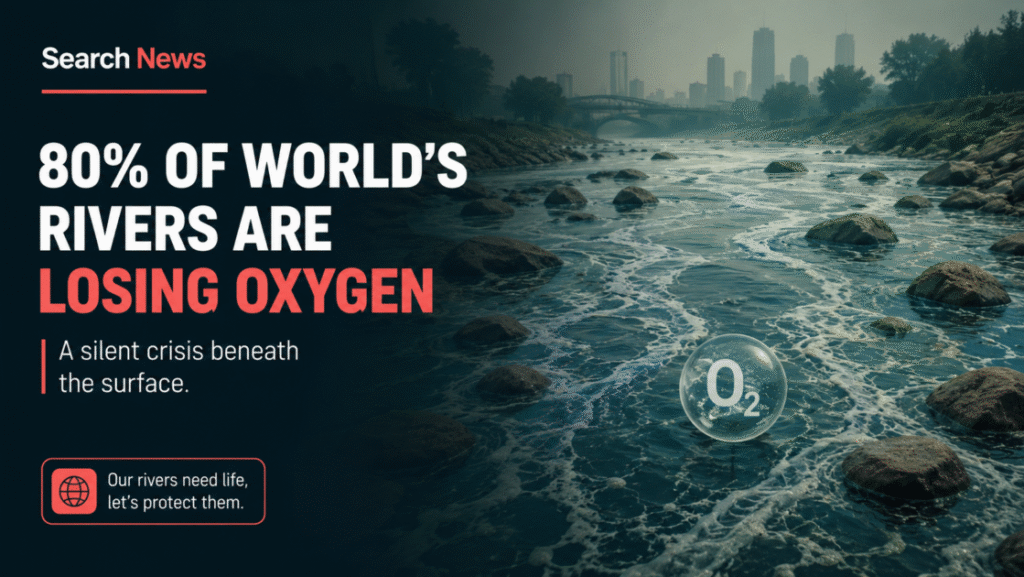
A new scientific study has revealed a worrying reality beneath the world’s flowing rivers — nearly 80% of rivers across the planet are losing oxygen, threatening aquatic life, water quality, and entire ecosystems.

The research highlights how rivers, often called the “lifelines of civilization,” are slowly suffocating due to rising temperatures, pollution, excessive nutrient runoff, and growing human activity. Oxygen in rivers is essential for fish, plants, and microscopic organisms that keep freshwater ecosystems alive. But scientists say that balance is now rapidly changing.

Experts explain that warmer water holds less oxygen naturally. As climate change increases global temperatures, rivers are becoming more vulnerable. At the same time, untreated sewage, industrial waste, fertilizers, and chemical pollution are adding pressure to already stressed waterways. The result is a dangerous decline in dissolved oxygen levels — creating conditions where aquatic species struggle to survive.
Researchers warn that low-oxygen rivers can trigger massive ecological consequences. Fish populations may collapse, biodiversity can decline, and harmful bacteria or algae may spread more easily. In some regions, rivers could eventually turn into “dead zones” where very little life can exist.
What makes the study even more alarming is the scale of the problem. Scientists analyzed river systems across different continents and found that the trend is not limited to one country or region — it is becoming a global environmental challenge.
Environmentalists say the crisis is largely invisible to the public because rivers may still appear normal on the surface while silently deteriorating underneath. They believe urgent action is needed through cleaner waste management, stricter pollution control, sustainable farming practices, and stronger climate policies.
The study serves as another reminder that the planet’s freshwater systems are under growing stress. And if rivers continue to lose oxygen at this pace, the impact could eventually reach human lives too — affecting drinking water, agriculture, food security, and livelihoods around the world.
Sometimes the most dangerous environmental crises are not the loudest ones. They flow quietly beside us every day.