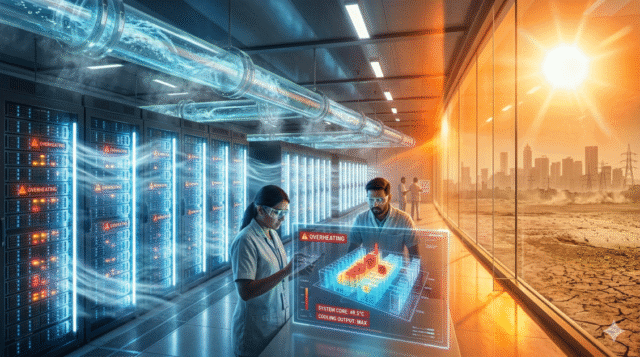
India’s AI Dream Faces a 50°C Challenge: Can Data Centres Survive the Heatwave Era?
India’s digital revolution is moving at lightning speed. AI startups are booming, cloud computing is expanding, streaming platforms are exploding in popularity, and the country is racing to become a global data powerhouse.

But there’s one growing problem threatening this digital dream — extreme heat.

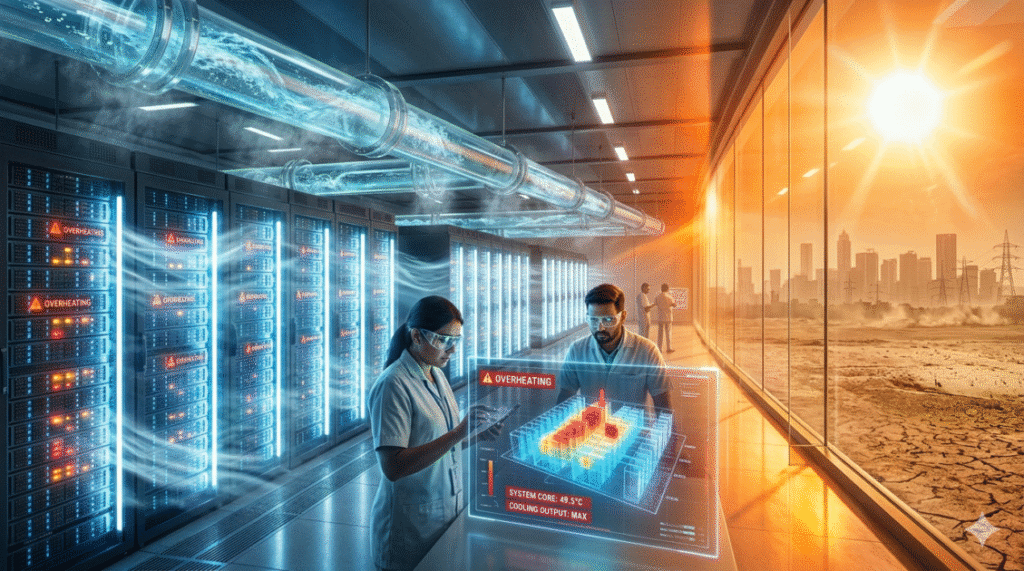
As temperatures across India continue to climb dangerously close to 50°C in several regions, experts are warning that the country’s rapidly growing data centre infrastructure could face serious pressure in the years ahead.
Data centres — the massive facilities that power AI systems, cloud storage, online banking, apps, streaming platforms, and digital services — generate enormous amounts of heat on their own. Keeping them cool is critical because even small temperature spikes can damage servers, slow systems, or trigger outages.
And now, India’s worsening heatwaves are making that task far more difficult.
According to climate experts, many of India’s biggest data centre hubs — including Mumbai, Hyderabad, Chennai, Bengaluru, and Noida — are already located in regions facing rising temperatures, water shortages, and stressed electricity grids.
Every degree of rising outdoor temperature forces cooling systems inside data centres to work harder. That means higher electricity bills, more water usage, and significantly increased operating costs.
Industry analysts say this could become a major challenge as India aggressively expands its AI and digital infrastructure ambitions. The country’s data centre capacity is expected to grow massively by 2030, especially with the rise of AI-powered services and GPU-heavy computing systems that generate even more heat than traditional cloud operations.
The situation becomes even more complicated because cooling systems often depend heavily on freshwater resources. In a country where water scarcity is already becoming a major urban issue, experts fear future conflicts between digital infrastructure demand and public water needs.
Some specialists are now calling this the “cooling versus quenching” challenge — balancing the needs of AI infrastructure with the realities of climate stress and limited natural resources.
To tackle the problem, companies are exploring futuristic cooling technologies like immersion cooling, liquid cooling, recycled wastewater systems, and even deep seawater cooling for coastal facilities.
At the same time, location strategy is also beginning to change. Instead of concentrating everything in major metro cities, companies may slowly start shifting parts of their infrastructure toward cooler or coastal regions where maintaining server temperatures is easier and cheaper.
Despite the risks, India’s data centre boom is showing no signs of slowing down. The country’s AI push, growing internet population, and digital economy continue to attract massive investments.
But one thing is becoming increasingly clear: India’s future as a global AI and digital superpower will depend not only on faster chips and bigger servers — but also on whether its infrastructure can survive a rapidly warming planet.