Adani Powers India’s Green Future With World’s Largest Battery Storage Project Outside China
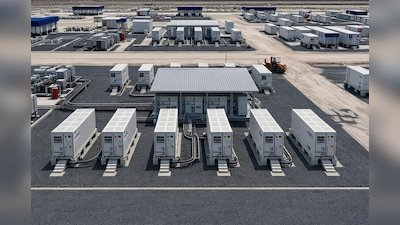
India’s clean energy ambitions just received a massive boost. In a landmark achievement, Adani Green Energy Limited (AGEL) has commissioned a gigantic 3.37 GWh Battery Energy Storage System (BESS) in Khavda, Gujarat — now being called the world’s largest single-location battery storage project outside China.

The announcement marks a major step forward for India’s renewable energy sector, especially at a time when the country is rapidly pushing toward round-the-clock green power and reduced dependence on fossil fuels.

According to the company, the newly operational battery system is powerful enough to store clean energy capable of supplying electricity to nearly one million homes for an entire day. It can also run more than 12 million LED bulbs continuously for 10 hours, highlighting the enormous scale of the project.
What makes the achievement even more remarkable is the speed of execution. AGEL completed the utility-scale battery storage deployment within just 10 months, making it one of the fastest large-scale energy storage projects developed globally.
Speaking on the development, Sagar Adani said large-scale battery storage will become the backbone of India’s future energy ecosystem. As renewable energy production grows rapidly, storage systems like these are essential for ensuring uninterrupted electricity supply even when solar or wind generation fluctuates.
The project is strategically located at Khavda in Gujarat, where Adani Green Energy is developing what is expected to become the world’s largest renewable energy park with a planned capacity of 30 GW by 2029. Nearly 9.9 GW of that capacity is already operational.
Industry experts believe battery storage projects like this could transform India’s power infrastructure by stabilizing electricity grids, improving peak-hour supply, and enabling renewable energy to become a reliable 24×7 source of power.
AGEL has also revealed ambitious future plans, aiming to add more than 10 GWh of battery storage capacity in FY27 and expand it to 50 GWh over the next five years.
As countries worldwide race toward cleaner and smarter energy systems, India’s latest mega-project signals that the nation is preparing to play a much bigger role in the global green energy revolution.