
China’s New Lab Could Change Computing Forever
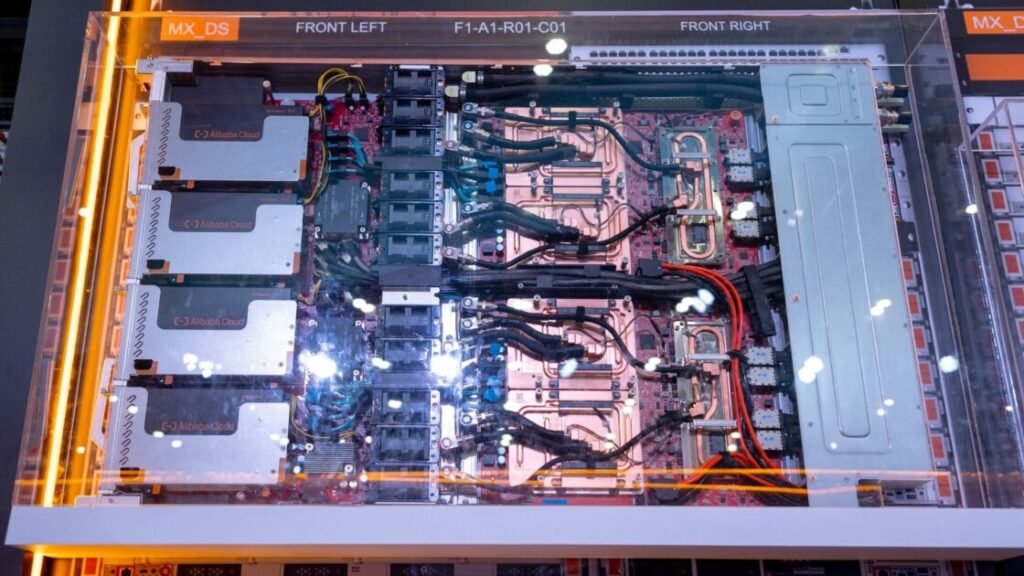
China has taken a major step in the global race for next-generation computing by launching a dedicated photonic computing laboratory in Shanghai. The new facility, established at Shanghai Jiao Tong University, will focus on developing light-powered computing technologies that could dramatically improve processing speeds while reducing energy consumption. The initiative comes as demand for AI infrastructure and high-performance computing continues to surge worldwide.

Unlike conventional semiconductor chips that rely on electrons moving through silicon circuits, photonic computing uses photons—particles of light—to process and transmit information. Scientists believe this approach can deliver significantly higher bandwidth, lower latency, and greater energy efficiency while generating far less heat. These advantages could help overcome the growing limitations faced by traditional chip technologies as AI models become increasingly complex.
The Shanghai Key Laboratory of Integrated Photonic Computing Chips and Systems will bring together academic researchers and industry partners to develop photonic chip architectures, optical devices, software ecosystems, and commercial applications. The project is a joint effort between Shanghai Jiao Tong University and Lightelligence, one of China’s leading companies in the emerging photonic computing sector. Chinese officials view the technology as strategically important for strengthening the country’s computing capabilities and supporting future AI growth.
Despite its promise, experts caution that significant technical challenges remain before photonic computing can be deployed at scale. Researchers must develop specialized software, algorithms, and engineering solutions capable of fully utilizing light-based hardware. Even so, the launch of the new laboratory signals China’s determination to accelerate innovation in advanced computing technologies and potentially reshape the future of AI, data centers, and global semiconductor competition.