“Guns Down, New Beginning”: 27 Maoists Surrender in Major Blow to Extremism in Jharkhand
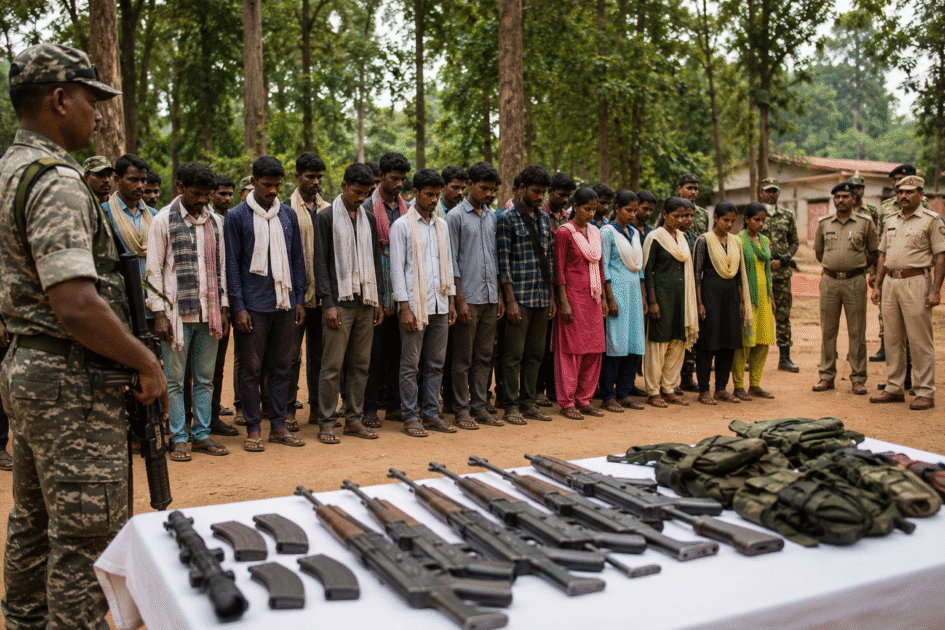
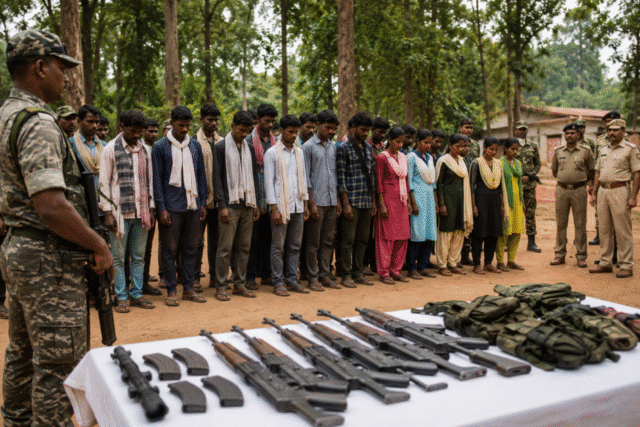
In a major breakthrough for security forces in Jharkhand, 27 Maoists surrendered before the police in Ranchi on Thursday, marking one of the biggest collective surrenders in the state in recent years. The move is being seen as a significant setback for Maoist networks active in the dense forest regions of Kolhan and Saranda.

According to officials, most of the surrendered cadres were linked to the squad led by senior Maoist commander Misir Besra, a key figure in the banned CPI (Maoist) organisation. Several of those who laid down arms were reportedly active members of strike squads and held important positions within the outfit.

The surrender took place under the Jharkhand government’s “Operation Navjeevan” initiative, which aims to encourage Maoists to abandon violence and return to mainstream society. Senior police officials, including Jharkhand DGP Tadasha Mishra, were present during the event. Authorities described the development as a major success in the ongoing anti-insurgency campaign.
For years, the forest belts of Jharkhand have witnessed Maoist influence, armed encounters, and security operations. However, officials say continuous pressure from police and central forces, along with rehabilitation policies, has weakened several Maoist groups. In recent months, multiple surrenders have also been reported from neighbouring states, indicating growing cracks within the insurgent network.
Sources claim many surrendered cadres expressed frustration with life inside the organisation and chose to return to normal life instead of continuing armed struggle. The surrendered Maoists are expected to receive benefits and rehabilitation support under government policy.
The latest surrender has sparked fresh optimism among security agencies, who believe the move could encourage more underground cadres to leave the path of violence. For Jharkhand, it is not just a security victory — it also signals a possible shift towards peace in regions that have lived under the shadow of extremism for decades.