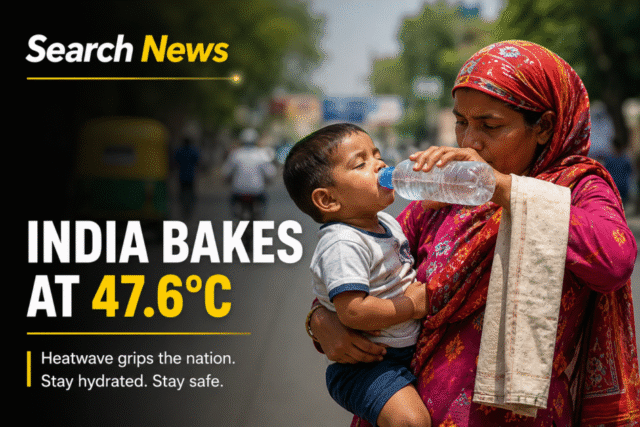
India Sizzles Under Brutal Heatwave as Temperatures Touch 47.6°C
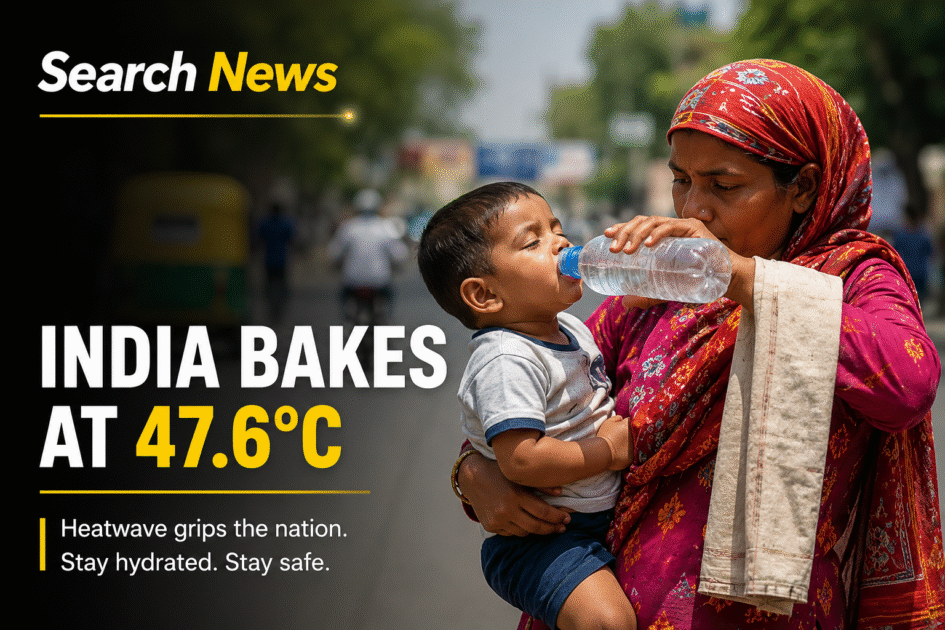
India is currently battling one of the harshest heatwaves of the year, with temperatures soaring to dangerous levels across several states and leaving millions struggling under relentless heat.

Uttar Pradesh’s Banda district recorded a scorching 47.6 degrees Celsius for the second consecutive day, making it one of the hottest places in the country. Major cities including Delhi, Ahmedabad, Nagpur, Jaipur, and Lucknow also witnessed temperatures far above normal seasonal levels, while even nighttime offered little relief as minimum temperatures remained unusually high.

According to weather experts, the ongoing heatwave is being intensified by a combination of domestic weather conditions and global climate factors. While extreme heat during April and May is common in India, scientists say rising urbanization, shrinking green cover, low pre-monsoon rainfall, and climate change are making these heatwaves more severe and longer-lasting than before.
One of the biggest reasons behind the current weather crisis is the likely return of El Niño conditions in the Pacific Ocean. El Niño is a global climate pattern known for increasing temperatures worldwide and often weakening India’s monsoon rainfall. Experts warn that this year’s southwest monsoon could remain below normal, raising concerns over water shortages, agriculture, and power demand in the coming months.
Cities are facing what experts call the “urban heat island effect,” where concrete buildings, roads, glass structures, and lack of greenery trap heat and make metropolitan areas significantly hotter than nearby rural regions. In some places, urban temperatures can become several degrees higher because of this phenomenon.
The rising temperatures are already affecting daily life across the country. Hospitals are witnessing more heat-related illnesses, electricity demand is surging due to increased use of cooling systems, and farmers are struggling to protect crops and livestock from heat stress. Health officials have advised people to stay hydrated, avoid stepping out during peak afternoon hours, and remain alert for symptoms of heatstroke.
As India waits for relief from the southwest monsoon, meteorologists say the coming weeks could remain extremely challenging for large parts of the country. For now, the nation is enduring a blazing reminder of how rapidly climate conditions are changing — and how vulnerable everyday life has become to extreme weather.