“Training Their Own Replacements?” Indian Factory Workers Now Teaching Robots How Humans Work
A quiet but unsettling transformation is taking place inside several Indian factories — one that is raising serious questions about the future of jobs in the age of artificial intelligence and robotics.

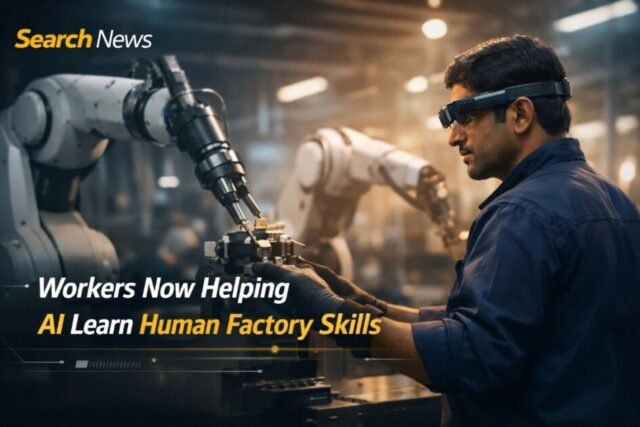
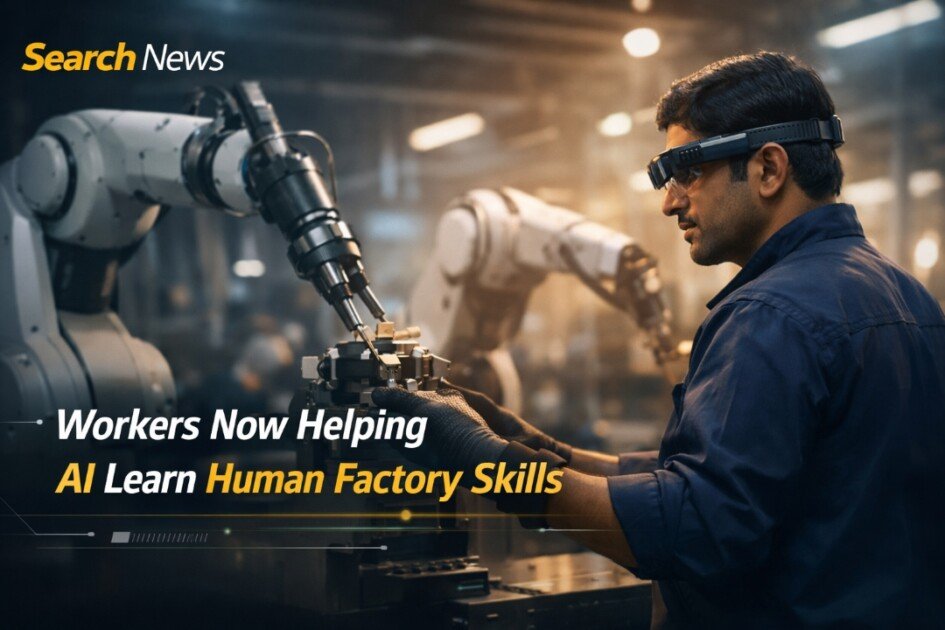
In textile factories across states like Maharashtra and Tamil Nadu, workers are now being asked to wear head-mounted cameras and smart glasses during their shifts. These devices record every movement they make — from stitching fabric and packing garments to repairing machines and handling delicate materials. The goal? To help train AI-powered robots to perform human tasks with precision and adaptability.

For many workers, however, the experience feels deeply uncomfortable. One factory technician reportedly described it as “working in your own grave,” fearing that the same footage he records today could eventually be used to replace him tomorrow. The recordings capture not just actions, but years of human instinct, skill, and muscle memory — something robotics companies around the world are now racing to collect.
The demand for such “human behavior data” is exploding as AI and robotics firms attempt to build machines capable of working in real-world environments like factories, warehouses, hospitals, and homes. Unlike traditional industrial robots that perform repetitive tasks, newer humanoid robots are being designed to think, react, and adapt more like humans. To achieve that, companies need millions of hours of real human movement data.
Some Indian companies involved in this data collection say workers are paid for participating and that the technology could eventually reduce dangerous or physically exhausting labor. Supporters argue that robots may take over dirty or risky tasks while humans move into better-skilled roles. But critics warn that workers often do not fully understand how their data will be used — or whether they are unknowingly helping automate their own livelihoods.
The issue has also sparked intense debate online. Social media users and Reddit communities reacted strongly to viral images of factory workers wearing recording devices, with many calling it “training your own replacement.” Others pointed out that workers may not have the freedom to refuse such assignments due to economic pressure and job insecurity.
Experts believe India could become one of the biggest testing grounds for the future relationship between humans and machines. As automation grows rapidly across industries, the challenge will not just be technological progress — but ensuring that workers are protected, reskilled, and not left behind in the race toward an AI-driven future.