
Ukraine’s Drone Strikes Spark Environmental Crisis Inside Russia
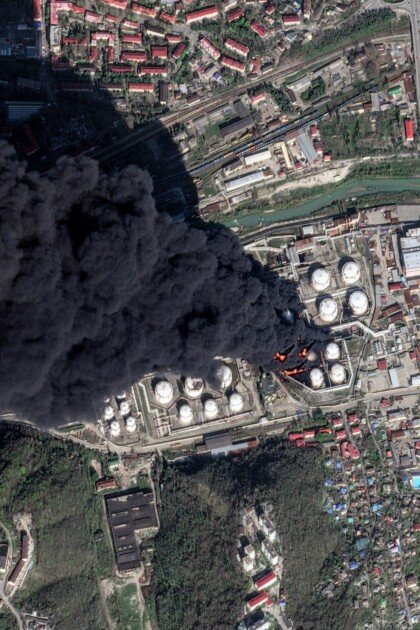
For years, the Russia-Ukraine war has been associated with destruction inside Ukrainian cities. But now, the impact of the conflict is being felt deep inside Russia itself — and not just militarily. A growing wave of Ukrainian drone strikes on Russian oil facilities is triggering what locals describe as a serious environmental disaster along Russia’s Black Sea coast.

One of the worst-hit areas is the Russian port town of Tuapse, where repeated drone attacks on a major oil refinery have turned the skies black with smoke and left nearby communities dealing with toxic air and oil pollution. Residents say the atmosphere has become unbearable, with soot-filled rain, a strong fuel smell and contaminated coastlines painting an alarming picture.

Environmental activists in the region claim this could be one of the largest oil-related ecological disasters the area has witnessed in decades. Massive fires at storage tanks and industrial facilities have reportedly released dangerous chemicals into the air, while oil leakage has polluted nearby waterways and coastal zones.
The attacks are part of Ukraine’s broader strategy to weaken Russia economically by targeting oil export infrastructure — a major source of Moscow’s revenue. Over the past few months, Kyiv has significantly expanded its long-range drone capabilities, allowing it to hit targets hundreds of miles inside Russian territory.
Russian authorities have acknowledged the damage but have revealed very little about the actual scale of the oil spill or environmental impact. Reports suggest that large volumes of contaminated soil and debris are already being removed from affected coastal regions.
The growing attacks highlight a major shift in the war. While Russia has long been accused of causing environmental destruction in Ukraine, Kyiv’s strikes are now bringing similar consequences to Russian soil. The development has also exposed the vulnerability of Russia’s energy infrastructure at a time when global oil markets remain highly sensitive due to geopolitical tensions.
As the conflict enters another intense phase, the environmental cost of war is becoming harder to ignore — not only on the battlefield, but also in the air, water and lives of ordinary people living far from the frontlines.