Mumbai’s Mega Eviction Drive Turns Chaotic as Homes Fall and Protests Erupt
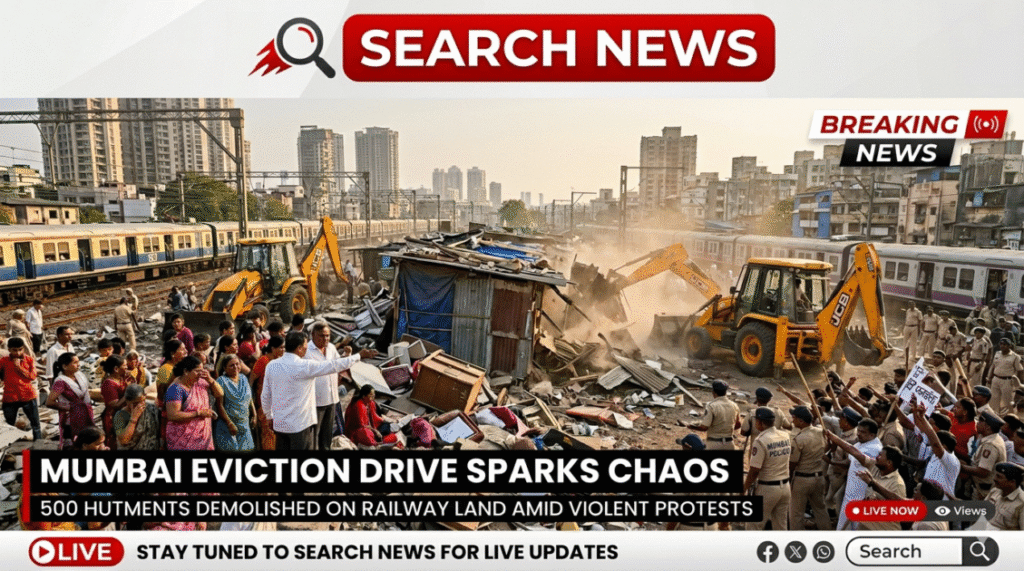
Mumbai witnessed one of its biggest anti-encroachment drives this week as authorities began demolishing hundreds of hutments in the Garib Nagar area near Bandra railway station. What started as a large-scale clearance operation soon turned tense, emotional, and violent, with angry protests, stone-pelting incidents, and heavy police deployment turning the area into a conflict zone.

The demolition drive, led by Western Railway after clearance from the Bombay High Court, targeted nearly 500 alleged illegal structures built on railway land reportedly worth around ₹600 crore. Officials say the land is crucial for expanding Mumbai’s railway infrastructure, including additional railway lines aimed at reducing congestion on the city’s overcrowded suburban network.

However, for thousands of residents living there for decades, the drive became more than just an administrative action — it became a fight for survival. Emotional scenes unfolded as bulldozers tore through homes while families rushed to save belongings. Women, children, and elderly residents were seen sitting amid debris under the scorching heat, with many fearing homelessness just days before Eid celebrations.
The situation escalated when clashes broke out between protesters and police during the operation. Stone-pelting incidents left several police personnel injured, and multiple arrests were made as authorities tried to regain control of the area. Security was tightened as the demolition entered its third day.
Authorities maintain that the action is necessary for Mumbai’s future infrastructure projects and railway safety. But the incident has once again sparked a larger debate — can a city chase modernization while thousands struggle to hold on to a roof over their heads?
As Mumbai races toward becoming a modern global metropolis with bullet trains, transit hubs, and mega infrastructure projects, the scenes from Garib Nagar are a stark reminder that development often comes with a painful human cost.